.png?width=50&height=50&name=10.CS-Redondo%20(1).png "Casa Sauza since 1873")
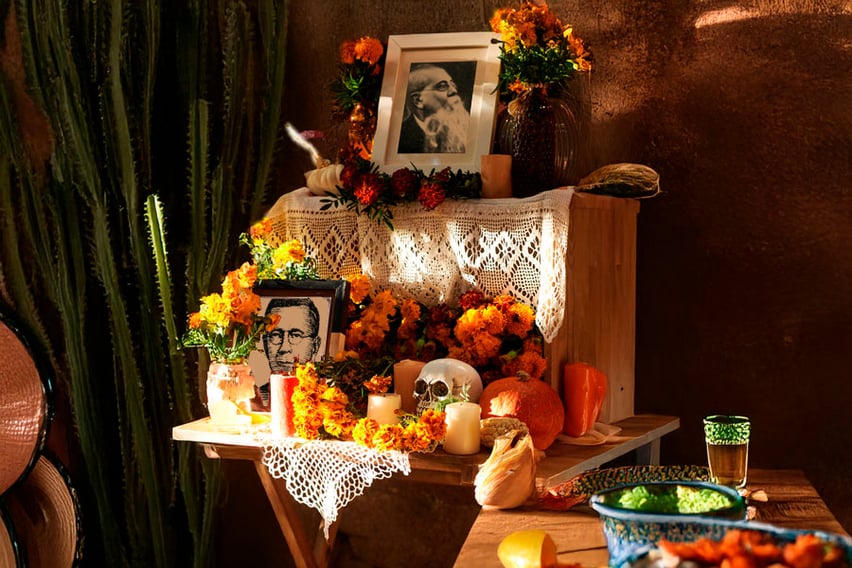
12 essential components of a Day of the Dead Altar include: a photo of the deceased, candles, marigold flowers, papel picado, food and drink, water, incense or copal, personal objects, skulls, salt, pan de muerto, and a flower path. Each one serves a symbolic purpose, guiding and welcoming the soul that returns on November 1st and 2nd.Día de Muertos is one of Mexico's most emblematic traditions, declared an Intangible Cultural Heritage of Humanity by UNESCO. The altar, also called ofrenda, is the centerpiece: a space filled with energy, love, color, and meaning where families welcome their loved ones who have passed. In this guide, you will find what goes on each level of the altar, what each element means, and how to incorporate a modern touch without losing the essence of the tradition.
Altar levels: how many to use and what they represent
The altar structure is organized in levels, each with a distinct meaning. There is no mandatory number — it is chosen based on the available space and family tradition.
Two-level altar
They represent heaven and earth. This is the simplest version and ideal for small spaces.
Three-level altar
They add the underworld, symbolizing the complete cycle of life, death, and the beyond.
Seven-level altar
The most traditional and symbolically complete version. Each level represents a stage of the journey the soul must travel to reach spiritual rest.
Modern touch: use shelves, drawers, or modular furniture to build the levels. The result is equally meaningful and adapts to any contemporary space.
The 12 essential elements of a Day of the Dead altar
1. Photo of the deceased
This is the central element of the altar. It is placed at the highest level so the spirit can be identified and welcomed. The photograph guides the soul back home.
Modern touch: frame the image in a digital photo frame that displays a carousel of moments from their life.
2. Candles and votive lights
The flames light the path of souls on their journey from Mictlán, the underworld in Mexica mythology. Traditionally, four candles are placed facing the cardinal points so the soul can always find its direction.
Modern touch: LED candles for spaces with children, or scented candles with the deceased's favorite aromas.
3. Marigold flowers
The intense orange color and aroma of this flower guide souls to the altar. Their petals are scattered forming a path from the entrance of the home to the ofrenda.
Modern touch: minimalist arrangements or combinations of marigolds with contemporary flowers that maintain the essence with a current style. In the United States, marigold flowers are widely available and make excellent substitutes.
4. Papel picado
It represents the wind, one of the four elements present in the tradition. Its movement symbolizes the presence of spirits. Colors carry specific meaning: yellow represents purity, and purple represents mourning.
Modern touch: laser-cut designs on recycled paper or reusable fabric versions with traditional patterns.
5. Food, drink, and tequila
The dishes and drinks the deceased enjoyed most in life are placed on the altar. Pan de muerto and sugar skulls are essential. The food is not consumed until the soul has had time to enjoy it — usually on November 3rd.
Tequila deserves special mention as Mexico's emblematic spirit — especially Jalisco's — and its presence on the altar is a way to honor the cultural identity and tastes of the loved one being remembered. At Casa Sauza, we have been part of Mexican families' history for more than 150 years. A reposado tequila like Hornitos®, or a premium expression like Tres Generaciones®, is a tribute to those who shared that culture in life.
Modern touch: prepare a glass of the deceased's favorite cocktail, or present the tequila in a handcrafted clay glass from Jalisco.
6. Water
The soul travels a long road to reach the altar. The glass of water quenches its thirst and symbolizes the purity of the spirit during its visit to the world of the living.
Modern touch: contemporary design glasses or water with seasonal fruit infusions.
7. Incense or copal
Copal purifies the environment, drives away negative energies, and opens the path for souls to arrive without obstacles. Its use in Mexican rituals predates the Spanish conquest — it is one of the oldest elements of this tradition.
Modern touch: essential oil diffusers with aromas that held meaning for the deceased or for the family.
8. Personal objects
The deceased's belongings — work tools, books, musical instruments, sports items — recreate their presence and strengthen the emotional bond with those who remember them.
Modern touch: digital objects such as a tablet with their favorite music or a photo frame with images of meaningful moments.
9. Skulls
A universal symbol of Día de Muertos, skulls represent the acceptance of death as a natural and inevitable part of life — not something to fear, but a cycle that connects generations.
Modern touch: ceramic, metal, or 3D-printed skulls with personalized designs that reflect the personality of the deceased.
10. Salt
It purifies the soul's body so it does not decay during its visit to the world of the living and can return to eternal rest without complications along the way.
Modern touch: geometric designs using colored salt or aromatic salts that add a visual element to the altar.
11. Pan de muerto
This sweet bread, decorated with bone-shaped dough and sometimes sesame seeds representing the tears of souls, symbolizes the cycle of life and death. It is shared among the living as part of the family celebration once the soul has enjoyed its offering.
12. Flower path
A trail of marigold petals from the home's entrance to the altar guides the soul on its return. Without this path, the spirit may not find its way.
Modern touch: LED lights shaped like petals or decorative rugs with floral motifs, preserving the symbolism with contemporary materials.
A tradition that connects generations
Building a Day of the Dead altar is one of the most profound acts of love in Mexican culture. By incorporating contemporary elements — a digital frame, scented candles, a premium tequila — the tradition is not lost, it is renewed so that new generations can make it their own.
At Casa Sauza, we have been part of the celebration of thousands of Mexican families for more than 150 years. La Perseverancia, our distillery in the heart of the town of Tequila, Jalisco, is one of the places where Día de Muertos takes on a special dimension: among agave fields, barrels, and the living history of those who came before us. If you want to experience it in person, discover our tours.

Frequently asked questions about the Day of the Dead altar
When should a Day of the Dead altar be set up and taken down?
The altar is set up starting October 25th or 26th to welcome souls that begin arriving on the 27th. November 1st receives the souls of children, and November 2nd the souls of adults. Traditionally, it is taken down on November 3rd, though some families leave it up until the 10th.
What is the difference between ofrenda and altar de muertos?
The altar is the physical structure with its levels — the table, shelf, or construction. The ofrenda is the collection of objects, food, and elements placed on it. In practice, they are used interchangeably, though technically the altar is the support and the ofrenda is the content.
Can you make a Day of the Dead altar without marigolds?
Yes. Although marigolds are the traditional flower par excellence, in regions where they are not available, other brightly colored flowers are used — especially orange and yellow ones — that fulfill the symbolic function of guiding souls. In the United States, marigold flowers are widely available and work as a direct equivalent of the original Cempacuchil variation. What matters most is the intention.
Why is tequila placed on the Day of the Dead altar?
Tequila is included among the deceased's favorite foods and drinks. In Jalisco and much of Mexico, tequila is a drink of celebration, gathering, and cultural identity. Offering it on the altar means sharing with the soul what they enjoyed in life.
How many levels should a Day of the Dead altar have?
There is not really a mandatory number. Two-level altars represent heaven and earth. Three-level ones include the underworld of the Mexicas or Aztecs. The seven-level altar is the most traditional, with each level representing a stage of the soul's journey. It is chosen based on the available space and family tradition.
